



















































































Insulated Render
An insulated render system is a multi-layered approach to thermal insulation applied to the exterior of a building. These systems help improve thermal efficiency and enhance energy performance while protecting the building façade. It typically involves the following layers:
- Rigid Insulation: This layer consists of boards or sheets that provide thermal insulation.
- Reinforcing Mesh: Applied over the insulation, this mesh enhances structural integrity.
- Render Base Coat: A layer of base coat material is applied to the mesh.
- Finishing Coat: The final layer is a protective render finish.
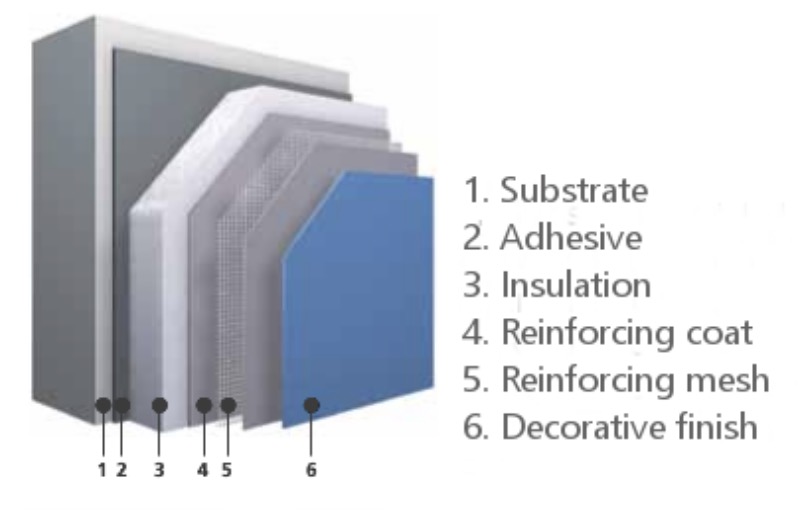
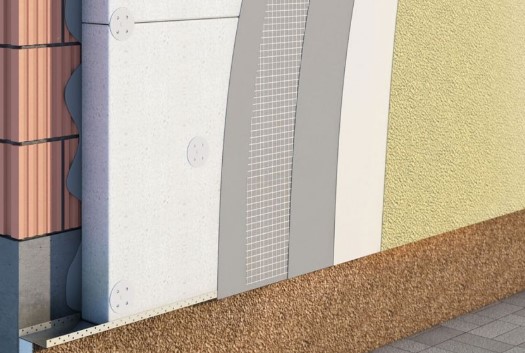
Insulated render systems are commonly used for improving thermal efficiency and enhancing energy performance in buildings.
- Insulation: The core component of an insulated render system is the insulation material. Common options include:
- Expanded Polystyrene (EPS): Lightweight and easy to install, EPS slabs are mechanically fixed to the existing wall.
- Mineral Wool Slab: Provides good thermal performance and fire resistance.
- Phenolic Foam Slab: Offers excellent insulation properties.
- Mechanical Fixings: These are used to attach the insulation boards to the wall. They can be made of metal or plastic. To minimize thermal bridging, adhesive-fixed insulation or a track & rail system can be used.
- Mesh Reinforcement: A mesh is applied over the insulation to create a key backing for subsequent layers.
- Render Base Coat: This layer provides a smooth surface for the final finish. It’s typically applied over the mesh.
- Finish Coat: The outermost layer is the decorative render finish.
- Silicone Render: Durable and water-repellent.
- Mineral Render: Breathable and natural-looking.
- Polymer Plain Render: Versatile and available in various colors.
- Polymer Dashing Render: Textured finish with added aggregates.
- Rendabrick: Simulates brickwork appearance.
- Acrylic and Silicate Renders: Different finishes for aesthetic variety.
- EPS (Expanded Polystyrene) System:
- Prepare the Surface: Clean and repair the existing wall surface.
- Fix Insulation Boards: Mechanically fix EPS insulation boards to the wall using appropriate fixings (screws or nails).
- Apply Base Coat: Apply a base coat (usually cement-based) over the insulation boards.
- Install Reinforcement Mesh: Embed a fibreglass mesh into the base coat while it’s still wet.
- Apply Finish Coat: Once the base coat is dry, apply the final decorative render finish (e.g., silicone render, acrylic render).
- Mineral Wool System:
- Surface Preparation: Clean and repair the wall.
- Attach Insulation Slabs: Fix mineral wool slabs to the wall using adhesive or mechanical fixings.
- Base Coat Application: Apply a base coat (cementitious or polymer-based) over the insulation.
- Mesh Reinforcement: Embed a mesh into the base coat.
- Final Render Coat: Apply the chosen render finish (e.g., mineral render, acrylic render).
- Phenolic Foam System:
- Surface Preparation: As with other systems, prepare the wall.
- Fix Phenolic Foam Slabs: Attach phenolic foam slabs using mechanical fixings.
- Base Coat and Mesh: Apply a base coat and embed reinforcement mesh.
- Finish Coat: Apply the desired render finish.
The finish coat in an insulated render system is the outermost layer that provides both aesthetic appeal and protection.
- Types of Finish Coats:
- Silicone Render: Durable, water-repellent, and available in various colors.
- Mineral Render: Breathable and natural-looking.
- Acrylic Render: Versatile and easy to apply.
- Polymer Plain Render: Offers different finishes for aesthetic variety.
- Polymer Dashing Render: Textured finish with added aggregates.
- Rendabrick: Simulates brickwork appearance.
- Application Process:
- After applying the base coat (which provides a smooth surface), the finish coat is applied.
- It can be trowel-applied or sprayed onto the surface.
- The thickness of the finish coat varies based on the system and manufacturer’s recommendations.
- Benefits:
- Weather Resistance: Finish coats protect against rain, UV exposure, and temperature fluctuations.
- Decorative: They enhance the appearance of the building.
- Breathability: Some finishes allow moisture vapour to escape while maintaining water resistance.
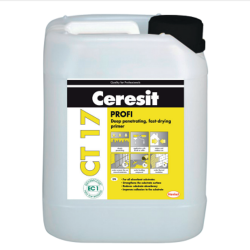
Brand: Ceresit
Model and Size: CT17 - 5litres
Delivery Time: 5 - 7 days
Ceresit CT17 penetrates deeply, binds dust, and reduces water absorption.
Properties:
Strengthens the substrate surface
Reduces substrate absorbency
Improves adhesion to the substrate
Application of tiles on cement and cement-lime substrates
after only 15 mins
Yellow colour – allows to contro..
£24.46
£29.35 inc VAT
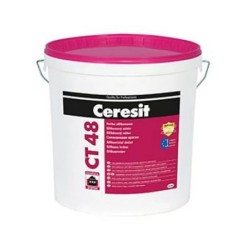
Brand: Ceresit
Model and Size: CT48 - 3.5l
Delivery Time: 2 - 3 Days More options available
Ceresit CT48 Silicone Paint is used for protecting facades, concrete constructions, interiors. It can be applied on the mineral substrates such as concrete, cement plasters, lime-cement plasters and lime plasters that have never been painted before. This paint can be used for painting mineral plaste..
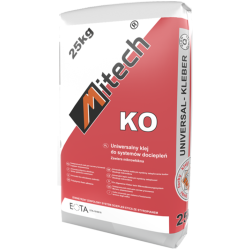
Brand: Ceresit
Model and Size: MITECH-25kg
Delivery Time: 1 - 2 days
PRODUCT DISCRIPTION- high adhesion to foamed polystyrene and substrate
- for installing foamed polystyrene and immersing reinforcement mesh
- component of BSO MITECH thermal insulation systemAPPLICATIONUniversal MITECH KO adhesive intended for making a glass-fibre mesh reinforced layer and for foa..
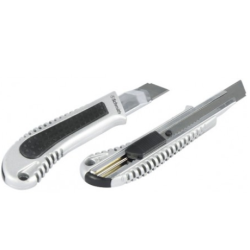
Brand: Ceresit
Model and Size: Schmith 18mm
Delivery Time: In stock, 1-2 days
- Heat-Treated & Hardened Carbon Steel Blade
- Tool-Free Blade Change- Without Spare Blade Storage
- Aluminium Safety Comfort-Grip..
£6.49
£7.79 inc VAT